The Lightning Bolt that Changed the World

lightning-gallery-18.jpg

A few years prior to Martin Luther’s fateful visit to Rome and his interrupted climb up the “Holy Stairs” he’d been a very promising student of law and philosophy. Martin’s father Hans had big plans for his eldest son and had spent a significant amount of money having him educated in law. There was no way Hans was going to have Martin follow in the family business of mining and was very insistent in pushing Martin towards a more prestigious line of work.

On a summer’s Sunday morning, as the twenty-one-year-old Martin set off from the family home to return back to his university studies in Erfurt, the future Reformer should have been paying more attention to the ominous weather on the horizon. A thunderstorm was gathering, but Luther’s thoughts were preoccupied with dissatisfaction over his studies. Like all university students have done for centuries, Martin wondered if his chosen degree was the right path to take.
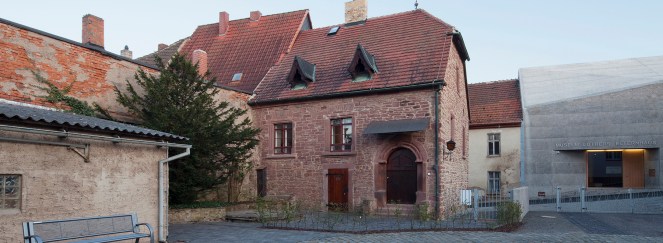
Luther family home in Mansfeld.jpg
The Luther family home in Mansfeld, Germany


Martin had been thinking about changing his degree to theology, but how would he tell his father of these possible plans? The young Luther remembered his recent experience in the university library where he’d chanced upon a Latin Bible hidden away in the library’s recesses. He’d heard sections of scripture read in church but this was the first time Martin had held a Bible in his own hands. That experience of holding God’s Word had so excited him he’d wondered if there would ever be a day he would have his own copy. So it’s ironic that history would later record the future Doctor Martin Luther as translating the Bible into the German language and changing the political and spiritual landscape of Europe for the next five hundred years.

Erfurt University.jpg
The University of Erfurt where Martin Luther studied Law and Philosophy


Martin’s thoughts were punctuated that Sunday as he noticed the lightning for the first time. The increasing volume told him the storm was heading towards him and so the promising university student sought shelter under a nearby tree.

But this would be no passing shower. The ensuing thunderstorm so petrified Martin Luther that when a nearby lightning strike shook the ground around him. Martin cried out desperately to Anna, the patron saint of miners – “Help me, Saint Anna!” So terrified of dying was Martin Luther he vowed that if he lived he would leave university and become a monk.
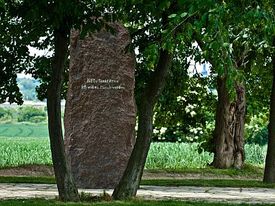
stotternheim_lutherstein_rdax_275x206.jpg
A memorial stone stands in the place where Martin Luther says he made a vow that if he lived he would become a monk.


Two weeks later, Martin Luther stood by the door of the St. Augustine Monastery of Erfurt. A couple of university friends stood beside him still trying to talk him out of his decision. Surely Saint Anna understood that a hasty vow made in mortal fear wasn’t binding.

Martin knocked on the monastery door and asked to be let in. His parting words to his worried friends would be: “This day you see me, and then, not ever again.”

Martin Luther was wrong. His friends would see him again, and so would the books of history. One lightning bolt had changed the world.
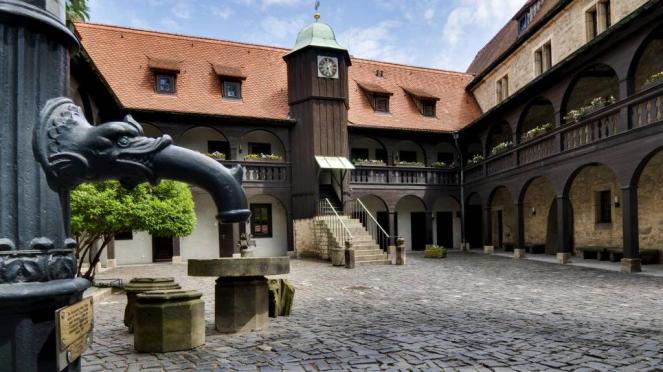
Erfurt monastry 2.jpg
The Augustinian monastery in the city of Erfurt where Martin Luther devoted himself to long hours of fasting, prayer, and confession

One small step for monks…

One Step.png

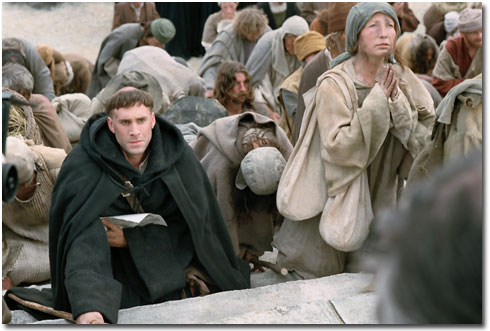
It should have been a fairly simple task. Martin wanted to climb the twenty-eight “Holy Stairs” on his knees just like Christian pilgrims had done for centuries. This young monk hoped the short pilgrimage up the staircase would earn him a small favour with the Almighty God – and therefore a little less time suffering in Purgatory. Martin Luther had already walked over seventeen hundred kilometres south from the town of Wittenburg in Germany to be in the ‘eternal city’ of Rome. Surely he could walk up another twenty-eight steps on his knees.

Ever since Luther could remember he’d had a fear of death. In later years he would compose a list of Bible verses that promised victory over death through faith in Jesus – and these scriptural promises would supress his anxieties whenever that fear of death resurfaced in his mind.

It was only twenty-eight steps, on your knees, pausing on each individual marble stair to say a prayer.

luther-scala-sancta.jpg


The year was 1511, and and a young Martin Luther had been boyishly excited when asked to go to Rome with a colleague on Augustinian business. When Martin first caught glimpse of the city from a distance he yelled out “Holy Rome, I salute you!” But once in the city itself the overtness and extent of priestly decadence was a shock to Martin’s naïve expectations. He encountered ministers who openly mocked the people they were meant to be ministering to. And he was perplexed at the number of prostitutes working in the city. At the time of Luther’s visit to Rome there was one prostitute for every fifteen people living in Rome at the time. Close to seven thousand prostitutes for Rome’s population of one hundred thousand people. As a young man who’d take a vow of chastity Martin was unable to properly process the hypocrisy.

Despite his disappointment, Martin desperately hoped that climbing these twenty-eight marble steps of the “Holy Stairs” would bring him a little more ‘right’ with God – at least enough to keep him out of Hell and shorten his time in Purgatory when death came calling for him. These ‘truths’ taught by the medieval church were designed to frighten and control – and with Martin Luther it was working.

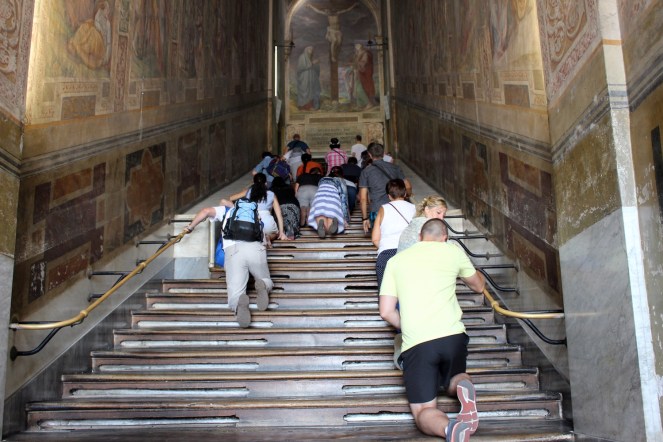
Holy Stairs from behind.jpg
Pilgrims climbing the “Holy Stairs” in Rome today. The steps were moved in 1589 from where Luther would have seen them the Lateran Palace and are now located across the road in the “Pontifical Sanctuary of the Holy Stairs”.


He knelt on the first step and felt a spiritual rush. These were the stairs that stood in the court of Pontius Pilate fifteen hundred years before. These were the “Holy Stairs” that Christ Himself walked up when called before Pilate to stand trial. Martin gazed at the second step before placing his knees upon it. There it was! The dark stain! Right in the middle of the step!! The stain of blood that had dropped from the tortured body of Christ – or so it was said. To Martin Luther there couldn’t be anything holier than climbing these steps – and so this twenty-seven-year-old monk desperately hoped that climbing these twenty-eight steps would make God less angry with him.


Holy stairs from the front.jpg
The Sancta Scala (“Holy Stairs”) in Rome are said to be the stairs from Pontius Pilate’s court that Jesus of Nazareth would have walked on. Tradition has it that Helena, the mother of Emperor Constantine, brought them back from Jerusalem around 326AD


When the famous British author Charles Dickens later visited these stairs in 1845 and watched Christian pilgrims ascending on their knees anxiously trying to win God’s favour he wrote: “I never, in my life, saw anything at once so ridiculous and so unpleasant as this sight.”

As Luther reached the middle of his short upward journey on the stairs something unexpected happened. He sensed a heavenly Voice speaking to him. It was a Voice that wasn’t filled with anger as Martin might have expected but a Voice filled with an everlasting love. And that Voice said to Martin Luther: “The just shall live by faith.”

the just shall live by faith.png
This spiritual truth is first found in Habakuk 2:4 in the Hebrew Bible and then repeated a number of times in the New Testament


The Voice and its short, biblical message vaulted the young monk to his feet. Martin ran down the stairs, out of the Lateran Palace and onto the streets of Rome.

Martin Luther had come to this city to do something that would please God in some small way. But instead the Saviour had pressed on Luther the reality that salvation doesn’t come from what we do – but from what He has already done. This spiritual reality would have been more obvious to Martin and the wider world had the church allowed the Bible to be freely available – but that would come later.

For now, the young monk from Germany would return from Rome to his homeland and begin to whisper to his colleagues a dawning realisation: “Sola Fide” (Faith in Christ alone). In the next few years this whisper would grow to become a roar ringing in the ears of kings, popes, and people throughout Europe.

The Reformation was beginning.

Three-headed Peacocks and the Early Flames of the Reformation

three headed peacock - constance (1).jpg

The German citizens of Constance today are proud of their role in history. The great “Papal Schism” (1378 – 1417) where three popes ruled the Christian world at the same time – each claiming the other was the ‘anti-christ’ – needed straightening out. There are memorials in the city today of three-headed peacocks wearing papal ‘mitres’ that mock the absurdity of this situation six hundred years ago.

Plaque.jpg

And so, the Council of Constance (1414 – 1418) not only found time to resolve this significant problem of having three popes at once, the collected clergy from around Europe also found time to burn some people at the stake.

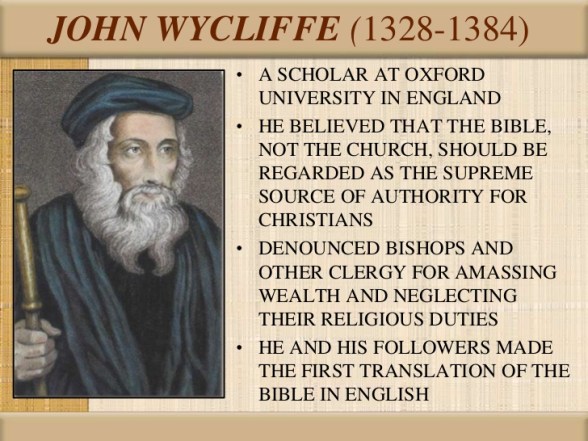
One of the first to be condemned was John Wycliffe. Wycliffe was a theologian and professor at Oxford University in England who’d spoken publicly about the Bible being the supreme authority when it came to the affairs of men. He also had the temerity to translate scripture from Latin into English so more people could read it. For this the Council of Constance condemned him as a heretic and the judgment was he should be burned at the stake. Fortunately for John Wycliffe he’d already been dead thirty years. But, the Council’s judgment must be obeyed and so the bones of Wycliffe were dug up, burned, and his ashes thrown into a nearby river.

John Wycliffe.jpg

A month after the Council’s condemnation of John Wycliffe the trial of John Huss began. John had been invited to Constance from the city of Prague where he ran the esteemed Charles University there. Huss had not only read Wycliffe’s writings but had them translated into the Czech language for his students to read. John Huss had also spoken out against the church’s selling of “indulgences” – an increasingly popular money-raising method where the church would take exorbitant payment from both rich and poor by promising to shorten the suffering an individual would experience in Purgatory when they die. The professor from Prague saw this for what it was – a spiritual shakedown – and he said so publicly.

Huss.jpg

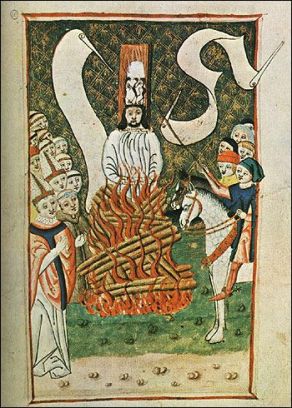
King Sigismund of Hungary wanted to hear more from Huss on these matters and invited him to the Council of Constance to speak. The king promised John Huss safe passage from Bohemia to Germany, and John’s mistake was to believe this promise would be honoured. In Constance, he was arrested, found guilty, tied to a pole, and set on fire. Just like his mentor Wycliffe, Huss’s ashes were also thrown into a river.

huss at the stake.jpg
A medieval depiction of Jan Huss’s execution (approx. 1500)


It’s been observed by historians that the church’s attempts to supress criticism through the burning of Wycliffe, Huss and other “pre-Reformers” ironically served to fuel the flames of a much wider movement. It would take a hundred years, but it was almost as if the rivers these men’s ashes were thrown into would slowly take their spiritual message to other lands and then across oceans.

The Reformation of the church that would shake Europe and the Christian world was only just beginning.

She’s got the whole world in her hands…

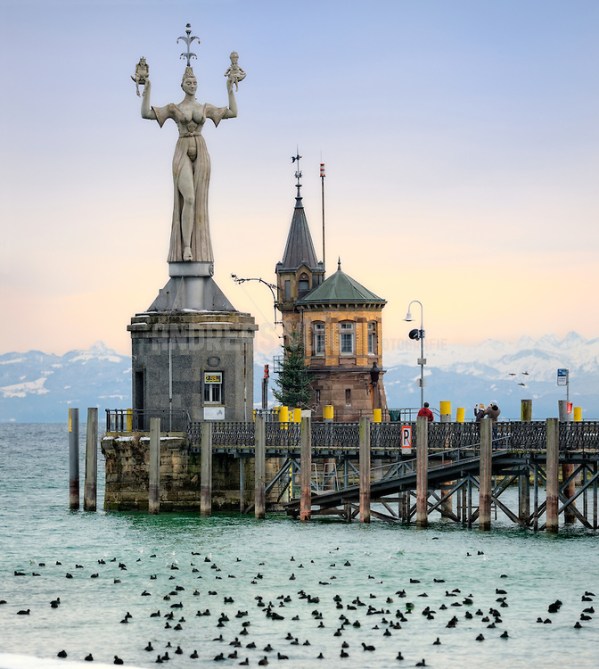
The charming lake-side German city of Constance has many picturesque features to photograph. But the most snapped attraction in this town is a nine-metre-tall prostitute holding a naked king in her right hand, while her left hand clutches an equally nude pope.

Prostitute1.jpg

To understand how such a statue could come to be erected in this city we need to go back six hundred years.

The Council of Constance began in the year 1414. In attendance would be a pope, a king, and approximately 18,000 ranking clergy – including 183 bishops and 29 cardinals. The main goal of this major gathering was to resolve the biggest leadership crisis the Christian church had ever faced – the situation where three popes ruled the Catholic Church at the same time. Referred to as the “Papal Schism” by historians it was a situation decades in the making and would take this large gathering three and a half years in Constance to clear up.

Constance1.jpg
The charming city of Constance in Germany became the centre of the spiritual and political world for three and half years during the “Council of Constance” (1414 – 1418)


So what does a medieval town like Constance need in 1414 to run such an important and prestigious congress for the clergy of the church? Food, accommodation, meetings rooms and halls, and fifteen hundred prostitutes.

Yes, you read those last three words correctly.

The church was in such a corrupt and immoral condition that fifteen hundred sex-workers were imported into Constance to help with each evening’s entertainment. In the face of such hypocrisy there were surprisingly few eyelids being batted in this medieval city – such was the church’s perishing shape.

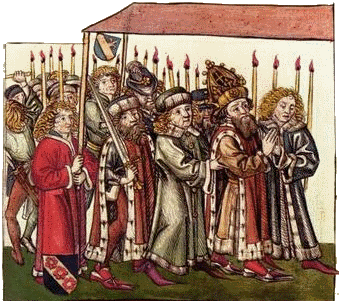
King arriving.gif
King Sigismund of Luxembourg and Hungary (soon to be King of the Holy Roman Empire) arriving for the Council of Constance

And so, the city of Constance has a statue down by the lake as a reminder of the less than salubrious state of spiritual affairs in the church in former times. It was a church in desperate need of Reformation.

By the lake today, as you gaze up at a gorgeous scantily-clad giant holding her two prominent clients, it is easy to stand in moral judgment of past religious leaders who should have known better.

Prostitute2.jpg
The nine metre statue of a prostitute (known as “Imperia”) stands by the Lake of Constance with mountains in the background. She holds both the secular and spiritual powers in her seductive grasp.

But in amongst the photographing and the tittering and the sniggering there’s a small voice that points to our own hearts. In the Sermon on the Mount Jesus tells his listeners to reflect on our own inadequacies before we adjudicate others. “Judge not, lest you be judged” says the Saviour. Yes, the church needed a Reformation, but so has each individual before and since the catastrophe that was the Council of Constance six hundred years ago.

“Create in me a pure heart, oh God, and renew a steadfast spirit within me” (Psalm 51:10) – a prayer for everyone needing their Creator to perform a reformation in their own life today.

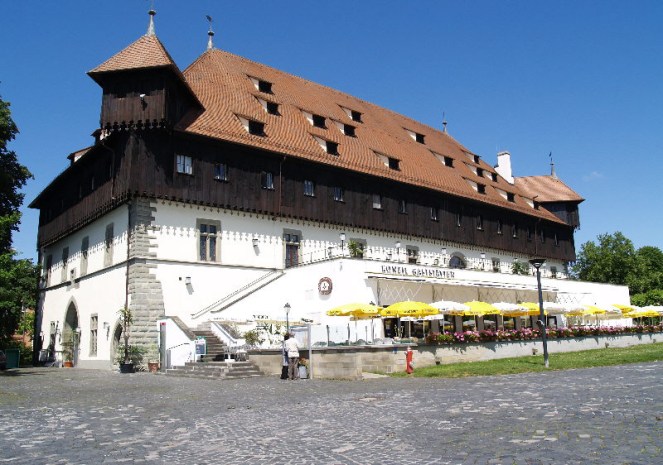
Guesthouse.jpg

Cross Purposes with Christian Symbols

AWEHangmansNoose.jpg

For many people the crucifix is a rather bizarre symbol to have as the primary representation of the Christian faith. As an ancient tool of torture and execution having a cross represent your religion is like having a hangman’s noose or electric chair or even a machete or AK47 assault rifle symbolising your faith.

But the cross that adorns many churches in western Christianity wasn’t the symbol of choice for the early church. Among the symbols used by the early Christian community was that of a fish. The first letter of each of the words in the statement “Jesus Christ, Son of God, Saviour” spells out the Greek word for “fish” and so the early church used the simple fish symbol to communicate what they believed.

fish.gif
The five letters of a profession of faith in Christ spell out the word for ‘fish” in Greek (ichthys)


Another symbol used in the first few centuries was “Chi Rho”. The first two letters in the word “Christ” in the Greek alphabet is what looks like an ‘X’ (or “Chi” as pronounced by the Greeks) and what looks a ‘P’ (or “Rho”). Combining these two letters to produce a monogram it had widespread use in ancient Christianity. It was this monogram Roman emperor Constantine was said to have dreamt about before placing it on his soldiers’ weapons and flags and winning a famous battle in 312AD.

Rom,_Calixtus-Katakomben,_Steintafel_mit_Christussymbol_"Chi_Rho".jpg
The “Chi Rho” symbol carved into the wall at the ancient catacombs of San Callisto in Rome

A visit to the catacombs of Rome where early Christians were buried in labyrinth-like underground tunnels reveal a variety of symbols the early church employed. It may surprise some that well before the cross we know today believers used an anchor to symbolise their faith. Perhaps it came from Paul’s writings – “This hope we have in Christ is a strong and trustworthy anchor for our souls” (Hebrews 6:19) – and so the anchor symbol came to embody the strength, steadfastness, and calmness that comes from a belief in a risen saviour.

catacombs-of-st-callixtus.jpg
The christian catacombs of San Callisto in Rome show a variety of symbols the early Christians used to identify their faith before the cross (as we know it today) became the primary icon

While symbols and icons for Christianity have changed over the last two thousand years the best symbol of faith in Christ has always been a sincere, gracious, and humble follower of the risen Saviour. So rather than wearing a cross around your neck or pinning it to a piece of your clothing to communicate your faith instead Jesus says to us today: “Love one another – and by this sign the world will know you follow me” (John 13:35)

French Resistance: The Story of Marie Durand

The Story of Marie Durand

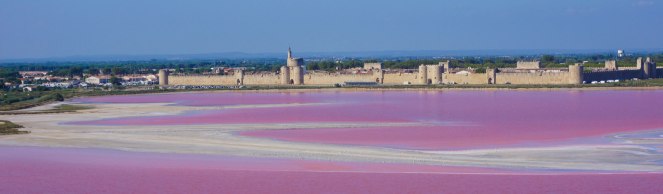
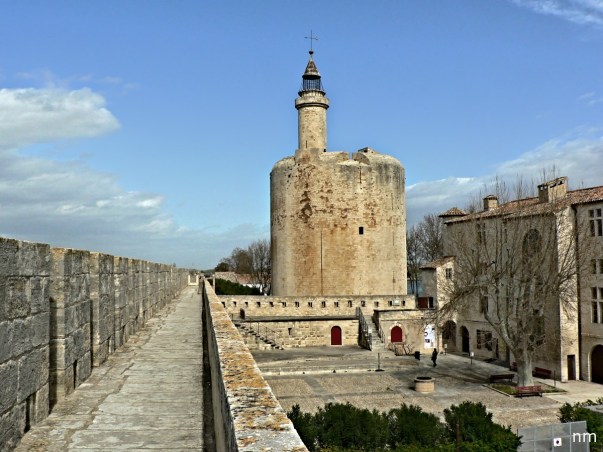
The Tower of Constance was the perfect place for a prison. With its six-metre-thick walls rising high above the heavily fortified French town of Aigues-Mortes which itself was surrounded by salty marshes. Escape from the Tower was nearly impossible.

Pink Salty.jpg
The ancient walled town of Aigues-Mortes in France. In front is the salty marshes that turn the water pink (Aigues-Mortes means “Dead Waters” in English)

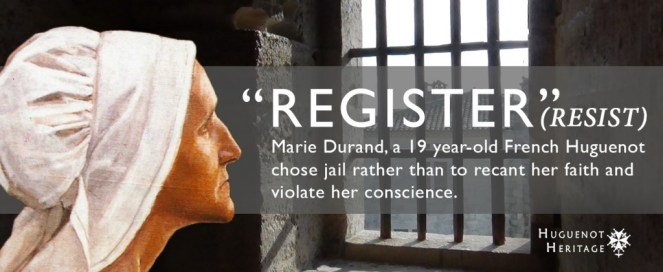
The year was 1730 and Marie Durand’s crime was to be the sister of a Huguenot Pastor who encouraged others to read the Bible for themselves. Young Marie also believed each individual was able to have a personal relationship with the risen Christ  – and for this she was sent to the Tower.

Marie was nineteen years old when she was imprisoned in the infamous Tower of Constance.

During her incarceration Marie Durand prayed with her fellow prisoners, shared Bible promises, and wrote messages of encouragement smuggled out to believers who themselves were being pursued by the French authorities.

painting.jpg
Huguenot prisoners in the Tower of Constance (painted by Jeanne Lombard in 1907)

Once every week a priest would visit Marie and ask her a simple question: “Do you renounce your belief that a person is able to read the Bible on their own, and therefore do you accept the teachings of the Catholic Church as the only true church?” If Marie would only say “yes” to that one question she would be freed from her cold, dark cell and returned to her family. But every week Marie’s reply was the same – “No” – and so in prison she remained enduring the most degrading conditions.

Marie Durand would be a prisoner in the Tower of Constance for thirty eight years.

Tower.jpg
Marie Durand was nineteen years old when she was first imprisoned in the infamous Tower of Constance – a women only prison in the French town of Aigues-Mortes. Marie would be a prisoner at the top of this tower for thirty eight years.

On a cold January day in 1767 Prince de Beauvau accepted an invitation for a tour of the Tower and what the Prince saw appalled him. The conditions of the prison and the depravity of the guards distressed him so deeply he went directly to the court of King Louis XV and pleaded for the women to be released. Marie was eventually allowed to return to the home of her birth where she died only a few years later, prematurely aged from her life in captivity.

Today, if you visit the eight-hundred-year-old town of Aigues-Mortes and climb the circular steps up the Tower of Constance to the top level, very little remains to tell a visitor it was once an infamous prison. But on the floor, towards the centre of the circular room that once held faithful women in chains, is a single French word carved into the stonework by Marie Durand and her fellow prisoners.

“RESIST” 

resistez.jpg
The French-Occitan word “REGISTER” (meaning “RESIST“) carved into the middle of the prison floor by Marie Durand

Marie Durand’s faith in Christ – and that one word she left behind – has inspired persecuted and oppressed Christians for two hundred and fifty years. And may her story inspire us today.

Main-banner-website1-1024x421.jpg

*******

David speaking 2

About this blog: Pastor David Riley is a Christian minister residing on the Gold Coast in Australia. This article is from his “Reverential Ramblings” series – which you can subscribe to by clicking “follow” on this website.

The Church in the Wilderness (Part 2)

waldensian-evangelical-temple2.jpg
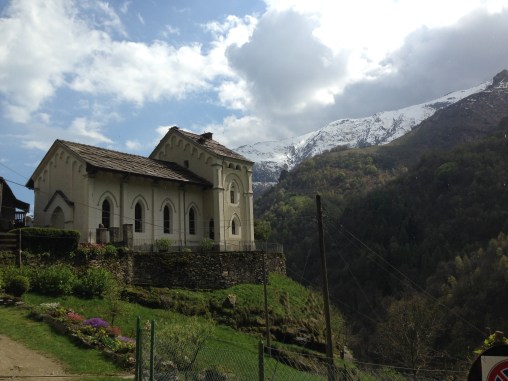
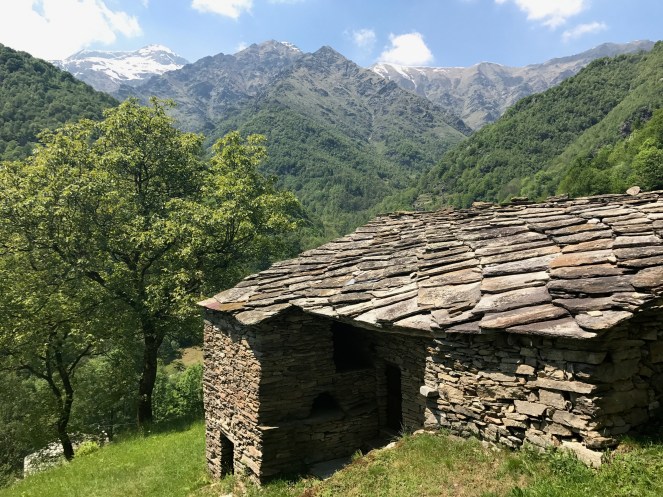
A Waldensian Church high up in the mountains of north-west Italy

It was only a matter of time before the church authorities based in Rome would impose their will on the peaceful “People of the Valley”. The crime of the Waldensians was their arrogance in believing they could interpret Scripture without first seeking permission from the church in Rome. The Waldensians simply would not recognise the Vatican in Rome as the supreme authority on all spiritual matters.

Pope Lucius III excommunicated the Waldensians in the year 1184 setting in motion five hundred years of severe persecution that almost annihilated these faithful people. Labelled as heretics their communities were pursued not just in north-western Italy, but also France, Germany, and Spanish-controlled southern Italy. In these regions Waldensian towns were torched and their entire population’s murdered or imprisoned. They were hunted through the forests and when they were discovered hiding in caves they were smoked out. Those that didn’t suffocate in the caves were put to the sword trying to escape. Old men, nursing mothers, and young children were imprisoned and starved, and others sent on death marches over steep cliffs.

Lux Lucet.jpg
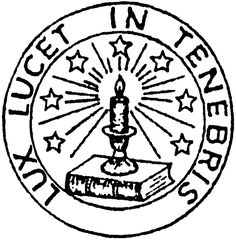
The Waldensian Symbol of a candle on a Bible surrounded by seven stars. The Latin motto is translated as “Light shining in darkness”.

One of the many massacres visited upon the Waldensians has been called by historians “The Bloody Easter of Piedmont”. In 1655, the Duke of Savoy issued a law that the Waldensian communities in these mountains should show hospitality to the 15,000 troops he was sending to bring peace to the region. The Waldensians unfortunately complied and had these soldiers stay with them in their towns and homes. The Duke’s plan was to punish these people for not attending a Catholic Church and also send a barbaric signal to any other community who intended to follow a faith other than the one sanctioned by Rome.

So, just before dawn on Saturday, 24th of April 1655, the signal was given and the Easter massacre of Piedmont began. What followed shocked the governments and people of Europe. Here is the eye-witness account of a Waldensian minister, Peter Leger:

“Little children were torn from the arms of their mothers, clasped by their tiny feet, and their heads dashed against the rocks; or were held between two soldiers and their quivering limbs torn up by main force. Their mangled bodies were then thrown on the highways or fields, to be devoured by beasts. The sick and the aged were burned alive in their dwellings. Some had their hands and arms and legs lopped off, and fire applied to the severed parts to staunch the bleeding and prolong their suffering. Some were flayed alive, some were roasted alive, some disemboweled; or tied to trees in their own orchards, and their hearts cut out. Some were horribly mutilated, and of others the brains were boiled and eaten by these cannibals. Some were fastened down into the furrows of their own fields, and ploughed into the soil as men plough manure into it. Others were buried alive. Fathers were marched to death with the heads of their sons suspended round their necks. Parents were compelled to look on while their children were first raped, then massacred, before being themselves permitted to die.”

AnnaCharboniereTortured.jpg
An illustration of the 1655 “Bloody Easter of Piedmont” (from a print published in London in 1658)

Nearly two thousand Waldensian men, women, and children were butchered in Piedmont that Saturday – the day of the week many in the Waldensian community considered holy according to the Scriptures.

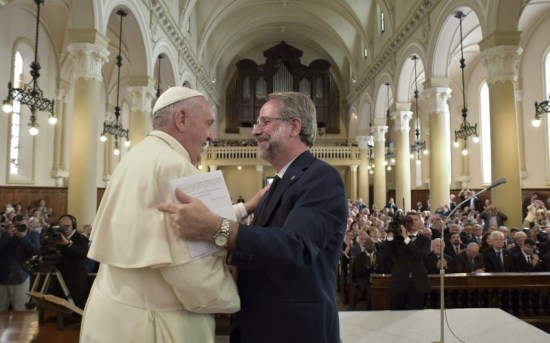
Four hundred and sixty years years later, in 2015, Pope Francis visited the Waldensian Church in the city of Turin, north-west Italy. The local church pastor Eugenio Bernardini asked Pope Francis “What was the sin of the Waldensians? It was being a movement of popular evangelisation, carried out by lay people.”

Eight hundred years after the church in Rome first excommunicated the ‘People of the Valleys’ Pope Francis responded: “On the part of the Catholic Church, I ask your forgiveness, I ask it for the non-Christian and even inhuman attitudes and behaviour that we have showed you.”

Pope Waldensian apology.jpg
Pope Francis visiting the Waldensian Church in Turin, Italy (2015)

Today, in the Waldensian Synod building located in the town of Torre Pellice in the mountains of Italy, there is a mural of a tree with a Bible open on its trunk. The tree has some of its branches missing in honour of the many who lost their lives over the centuries endeavouring to live a simple faith in their Saviour Jesus Christ. The Bible on the tree is open to Revelation 2:10 – “Be thou faithful unto death.” And the words under the tree written in Italian read: “We swear and promise by the living God to remain faithful to the last drop of our blood.”

Waldensian tree.jpeg

Centuries ago a church in the wilderness gave us an example for today of unwavering commitment and faith in a loving Creator.


****

About this blog: Pastor David Riley is a minister of the Seventh-day Adventist Church and lives on the Gold Coast in Australia. This article is from his “Reverential Ramblings” series – which you can subscribe to by clicking “follow” on this website.

Want to read more inspirational stories of faith from this series? Click here to read what the Duke of Wellington can teach us about taking Communion.David speaking 2

The Church in the Wilderness (Part 1)

WaldensianAlps6.jpg

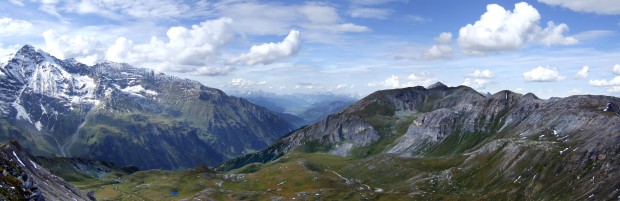
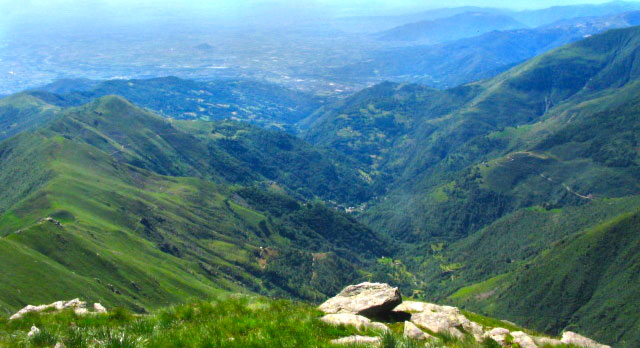
In the mountains of north-west Italy – not far from the city of Turin – a community of Christians lived humble and quiet lives for centuries. This community’s core belief was their faith should only come from the Bible’s teachings – and not from any man-made traditions or customs.

This “church in the wilderness” of the Italian Alps became known as the Waldenses – meaning “People of the Valley”. It was in these mountain valleys, high up and far away from the excesses of the surrounding cities, that families and communities lived safely and simply in their belief in a risen Saviour.

AngrognaImage-enhanced.jpg

Their simple, genuine and life-affirming belief in Christ amongst these mountains would be contrasted with the pride and indulgences of the headquarters of the medieval church less than five hundred miles south in the city of Rome. While the Waldensian communities held their worship services in mountainous caves the official church was building massive monuments and cathedrals all through Europe.

IMG_0664.jpg
A cave in the mountains where some of the Waldensian community would hold their worship services centuries ago (our study group had prayer and sang two ancient hymns)

And the reason for the uncomplicated and contagious faith of the Waldneses was these people of the valleys had long been in possession of Bibles translated into their own language. The Waldensians of north-west Italy didn’t require a priest or Pope to interpret the values of God’s kingdom to them. Instead, they would read the Word of God themselves and teach it by memory to their children. It was in communities like the Waldenses that God preserved precious truths such as salvation by faith in Christ alone, simplicity of life, service to others, and honouring the seventh day Sabbath as a symbol of obedience to the Creator.

IMG_0701.jpg
An ancient school where the Waldensians would teach the Bible to their children and youth

It was in God’s Word the Waldenses knew they were to take the good news of salvation to the world. Waldensian missionaries – young and old – walked out of the valleys, over the mountains, and into the world with a message of hope.
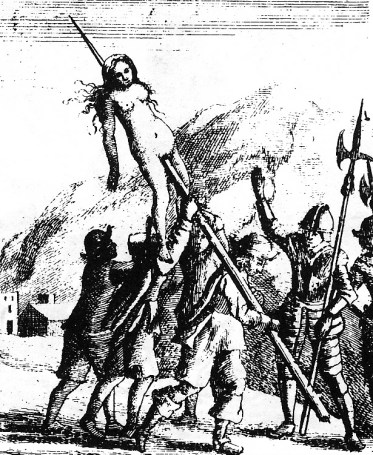
Mark 16.jpg

As these missionaries from the mountains encountered others they would sense some were open to biblical truth. When they were lead by God’s Spirit they gave these people sections of Holy Scripture. Sometimes their gift was only a page or even a few verses, sometimes it was an entire book. These gifts were words of life to people who had never seen the Bible in their own language, and in doing so the Waldensians were daily risking their own lives. In sharing the Gospel these people from the wilderness sowed seeds of salvation that would bring spiritual enlightenment to thousands.

The Waldensian motto became “lux lucet in tenebris” – meaning a light shining in darkness.

Lux Lucet.jpg

So, it was only a matter of time before the dark forces of kings and popes – realising their hold on their kingdoms would be lost if people read the Bible for themselves – would unleash multiple massacres on the Waldnesians that would shock the world.
(To be continued in Part Two – click here)

*****

About this blog: Pastor David Riley is a minister of the Seventh-day Adventist Church and lives on the Gold Coast in Australia. This article is from his “Reverential Ramblings” series – which you can subscribe to by clicking “follow” on this website.

Want to read more inspirational stories of faith from this series? Click here to read what the Duke of Wellington can teach us about taking Communion.David speaking 2

Starting Fires in Florence

florence-shopping-pontevecchio-xlarge.jpg
The “Old Bridge” over the Arno River in Florence

It all started so well for Girolama Savonarola. With his message of heart-felt change and personal piety he had thousands of people turning up to his church in the city of Florence (Italy) to hear him preach each weekend. The city of Florence – now known for its art and culture – for a short period of time would be Girolama Savonarola’s city.
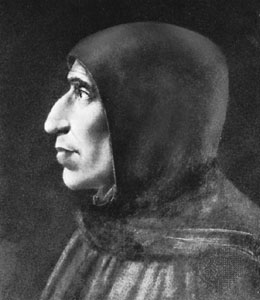
That’s until the people of Florence had him hanged, burnt, and thrown into the river on May 23rd, 1498.

Girolama was always a bit different. He was short, had strange facial features, and would write poetry calling the Catholic Church’s governing body a “false, proud whore”. Probably not the best career move for a Dominican Friar.

Girolama.jpg

Despite his personal short-comings and confrontational style the people of Tuscany flocked to him hear him preach on topics like the end of the world, the evil of wealth, and the need to live a humble and upright life just as Jesus did. The year 1500 was approaching and the people of Florence felt surely that had to mean the second coming of Jesus Christ and the end of days.

Girolama enlisted the children of the city to go door-to-door collecting anything that would be a distraction from a relationship with God. They collected things like mirrors, cosmetics, chess pieces, card games, musical instruments, women’s hats, books and art. With these items they built tall piles in the city and set them on fire – calling them “Bonfires of the Vanities”. While it’s lamented today that priceless Renaissance art ended up in ashes, Savonarola’s aim was for Christians in Florence to take their faith seriously and have it affect their daily lives for the better. After centuries of greedy and immoral behaviour from Florence’s clergy Friar Girolama Savonarola was a breath of fresh, pious air.

220px-Savonarola_monument,_Ferrara.jpg
Statue of a preaching Girolama Savonarola in his hometown of Ferrara, Italy

Savonarola virtually became the ruler of the great Italian city of Florence, but as often happens things began to change. Perhaps it would have been wise not to call out Pope Alexander VI for his obvious corruption and also call the Vatican “the sink of Christendom”. Or maybe when the young people of Florence rioted due to not being able to sing or dance Savonarola should have recognised that it’s OK for a Christian to occasionally have some healthy fun. But Girolama was a man of principle and he felt he had to speak his mind, even when the Pope excommunicated him.

So when the Pope threatened to place an interdict on Florence unless the city stopped the short monk with strange facial features from preaching, it was inevitable that Girolama Savonarola would end up in the public square just outside the Old Palace being hung, burned, and thrown in the river.

savoranolaexecution1700.jpg
“Execution of Girolamo Savonarola in Piazza della Signoria” by Francesco di Lorenzo Rosselli (Museo di San Marco, Florence).

Today marks the 519th anniversary of his death and the people of Florence will place flowers around the plaque that commemorates his execution, as they have done every year since.

Fiorita_commemoration_Savonarola_Florence.jpg
The annual “Florita” at the plaque that marks the place of Girolama Savonarola’s execution

Savonarola wanted to reform a church that had wandered significantly from the Saviour’s teachings, but historians today will say he went too far too fast. Twenty years after Girolama Savonarola’s death Martin Luther would learn from his mistakes and spark the Reformation that would light a spiritual fire through Europe. We celebrate the 500th anniversary of that event this year.

A Dead Man on Trial

How does a workplace dispute end up in a dead man going on trial?

The setting for this bizarre court case is the famous Cathedral of Saint John Lateran in Rome. Despite what most people believe Saint John Lateran is the main cathedral in Rome and not St. Peter’s. As you enter Saint John Lateran you see these words in Latin set into the stonework: “This is the head and mother of all churches in the city and the entire world”.

St John Lateran 2.jpg
The entrance to Saint John Lateran Cathedral

The cathedral was first built over seventeen hundred years ago and during the centuries has seen the crowning of popes, the convening of important conferences, and the signing of dramatic documents.

This church claims to hold the severed heads of the Apostles Peter and Paul and regularly the masses are held under the canopy that holds these heads. When Emperor Frederick II was threatening the city of Rome in 1241AD Pope Gregory IX brought out the skulls of Peter and Paul and held them up to the people of Rome in order to rally the population to resist the Emperor’s attacks.

St. John Lateran.jpg
The interior of Saint John Lateran with the statues of the twelve apostles lining the side walls

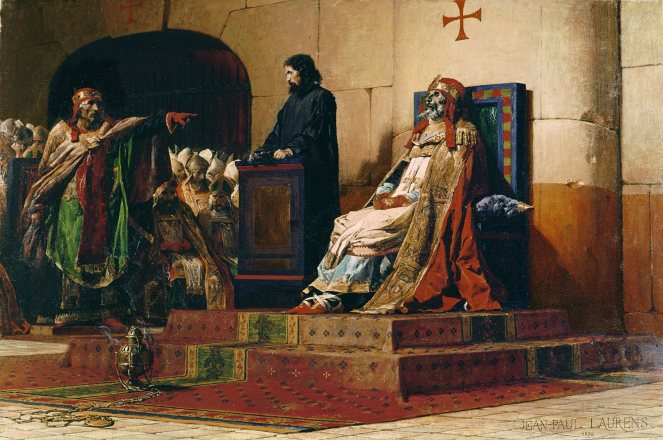
One of the more bizarre incidents this cathedral has seen is the trial of Pope Formosus by his successor Pope Stephen VI in 897AD. What was different about this trial was that Pope Formosus had been dead for nine months. Pope Stephen had Formosus’s corpse dug up and dressed in his papal clothes. Formusus’s body was placed on a throne and tried for perjury, covetousness and disloyalty to the church. The dead body even had a lawyer assigned to it, but despite the lawyer’s best efforts the mute corpse was found guilty of the charges. Part of the court’s judgment was to have three fingers cut off Formosus’s body – the fingers he would have used to give a blessing when he was alive. He was reburied in a commoner’s grace – but Pope Stephen IV still wasn’t done with disparaging his predecessor’s legacy. Stephen later had Formosus’s body re-exhumed and thrown into the Tiber, the main river in Rome.

Jean_Paul_Laurens_Le_Pape_Formose_et_Etienne_VII_1870-2.jpg
“Pope Formosus and Stephen VI – The Cadaver Synod” painted by Jean-Paul Laurens (1870) 

So, if you ever hear that a former work colleague is being critical of your efforts remember it’s probably not as bad as the fate of Formosus!

Since this bizarre trial in the ancient cathedral of Saint John Lateran in Rome no pope since then has chosen to take the name Formosus when they’ve been crowned.

Wise choice, don’t you think?….