The Skydiver Who Forgot His Parachute

skydiving-fantastic-56aa01e03df78cf772ac053c.png

As Ivan McGuire boarded the small airplane with his video camera, the experienced skydiver didn’t know this would be his final ever flight.

Ivan worked as a cameraman filming nervous student parachuters taking their first-ever jump. He’d made hundreds of these flights, and so any fear of leaping from a moving object three thousand metres above the ground had left Ivan long ago.

On April 5th, 1988 Ivan McGuire jumped from a plane with his heavy VHS recording deck strapped to his back and a camera mounted to his helmet. Ivan had already completed two of these filming jumps that day, so he was a little fatigued – which may account for his soon-to-be-discovered forgetfulness.

On this final scheduled jump for the day Ivan calmly filmed the student strapped to their instructor as they both free-fell and then opened their combined parachute. Ivan instinctively reached around to open his parachute…. and discovered he’d forgotten to put one on.

How had an experienced sky-diver forgotten to put on his parachute? Well, we don’t know for certain. Perhaps it was simply tiredness after a busy day of jumping, or maybe he’d mistaken the video pack on his back as his usual parachute. We can only imagine what might have gone through Ivan’s mind as he plummeted to Earth from ten thousand feet with nothing to save him.

The salvaged video footage recorded from his helmet shows Ivan going from matter-of-fact calmness to understandable panic.

It seems Ivan McGuire – on the day of his death – had simply gone-through-the-motions of his normal daily routines, without ensuring he had one very important thing with him. His parachute!

I’m hoping you can you forgive me as a minister of religion for likening this story to a spiritual cautionary tale. Yes, we do need to live each day as if it might be our last,  BUT… we also need to be double-checking every day the faith we have in a loving Creator. Our faith in a Saviour is our ‘saving parachute’.

For those reading this story who have already recognised God in their life – the Bible tells us: “Do not be frightened, and do not be dismayed, for the Lord your God is with you wherever you go.” (check out Joshua 1:9). This biblical promise is a daily ‘parachute of faith’ allowing each of us to land safely whenever we fall.

Click here to view Ivan McGuire’s helmet video of his final jump

*******

About this blog: Pastor David Riley is a minister of the Seventh-day Adventist Church and lives in Australia. This article is from his “Reverential Ramblings” series – which you can subscribe to by clicking “follow” on this website.

Want to read more inspirational stories of faith from this “Reverential Ramblings” series? Click here to read the strange story of how one orchestra member saved his colleagues from the wild temper tantrums of their world-famous conductor.

Or click here to join the Facebook page for “Reverential Ramblings”.

David speaking 2

The Missing Piece

“THE MISSING PIECE”

Antique_mechanical_clock.jpg

There’s a bizarre story of a young lad who loved to take apart the family’s household appliances so he could see how they worked. His parents encouraged his curiosity (as they reasoned it was better than spending hours playing games on Xbox) just as long as their son put the equipment back together again in perfect working order.

His parents went out one afternoon for a few hours leaving the teenage boy at home alone – and this young, inquisitive tinkerer thought he would challenge himself. He decided to take apart the family’s antique grandfather clock.

He carefully swirled his screw-driver and twisted his favourite tools to have all of the vintage mechanisms lying across the lounge room floor. He admired the craftsmanship of the inner-workings of a hundred-year-old clock, and he was careful to remember where each part went.

clock-inner-workings.jpg


As he put the antique timepiece back together again he felt a rush of adrenaline. His parents had warned him away from the heirloom clock for years as they feared the teenage boy would damage it, but now he’d been able to examine it without their knowledge and his parents would never know.

But, the feeling of achievement began to disappear as he neared the end of the restoration. The young lad had one piece left over and he had no idea where it was meant to go. As he considered an attempt to take the clock apart again he heard his parents’ car coming up the family driveway, and so he ran upstairs to his bedroom and thrust the left-over mechanism under his pillow.

That evening as the family ate dinner the antique clock operated as it always did. They watched a long movie together and the clock continued to strike the bells of the hour with military precision. As the family prepared for bed after a long day the boy’s worries began to ease. He sensed he’d escaped any parental discovery of an expensive heirloom’s unauthorised dismantling.

At midnight, as the teenager lay in bed thinking about the close-call, the clock began its usual chimes. The young lad counted them to help get to sleep – nine, ten, eleven, twelve…. thirteen, fourteen! The boy sat up in his bed. The clock continued ringing…. eighteen, nineteen, twenty. The boy – once again his body surging with adrenaline at the probability of being discovered – jumped out of bed. “Bong…. Bong…. Bong….” – Thirty-six times, thirty-seven times…the clock continued as if it would go on for eternity. He grabbed the missing piece from under his pillow and began to run down the hall towards his parents’ bedroom unsure of what he was going to say.

The teenager banged on the bedroom door, and with the chimes still ringing through the family home he yelled out the first thing that came into his head: “Wake up, everybody! Wake up! It’s later than it’s ever been!!”

time-tracking-is-key-to-time-management.jpg

This wry story is, in a way, a reminder of the Bible’s promise of eternity. Jesus of Nazareth spoke with His followers about having a sense of urgency regarding the coming of the Kingdom of God. He discouraged any delay in surrendering our sins to Him as our Saviour, and then seeking His ever-lasting forgiveness as we align our lives with Him.

To illustrate this sense of urgency Jesus told a story of five maidens who were sleepy, foolish and complacent, and another five who were wise and stayed ever-alert to the coming of their master. Jesus concluded the story by saying to His Disciples – “Keep watch therefore, for you know neither the day nor the hour in which I am returning.” (Matthew 25:13)

So, for believers in the return of Jesus Christ there is a message. And that message is: “Wake up! It’s later than it’s ever been”

(Read about another teenager from three hundred years ago who showed incredible faith in her Saviour despite her deplorable circumstances)


********

David speaking 2

About this blog: Pastor David Riley is a Seventh-day Adventist minister residing on the Gold Coast in Australia. This article is from his “Reverential Ramblings” series – which you can subscribe to by clicking “follow” on this website.


Feed the Right Wolf

There’s an old story from American folk-lore of a Cherokee elder speaking with his grandson.

“Grandson,” the wise elder says to the young lad, “Let me tell you about a battle that goes on inside everyone. It is the battle between two wolves”

As the young impressionable boy looks up his grandfather continues: “One of the wolves inside us all is called ‘Evil’.  This wolf is anger, it is hatred, it is discord and jealousy, It is rage and envy, greed, arrogance, self-pity, resentment, lies, lusts, and superiority.

“The other wolf that is inside us” continued the Grandfather “is called ‘Good’. This wolf is hope, it is serenity, it’s humility, joy, contentment. It’s love, peace, kindness, gentleness, generosity, truth, compassion and faith.”

The Cherokee elder was then silent, and the grandson thought about these words for a moment. After a few minutes the young boy looked up and asked: “Grandfather, in the end which wolf wins?”

The old Cherokee elder replied simply, “My son, the wolf you feed is the one that wins.”

Blog-post-2-wolves

The truth of this often told tale are echoed in the Bible. The ancient words of Scripture speak also of a battle between good and bad. It’s a battle we see in our wider world, and it’s a battle we see in our own souls.

Christ in His battle with Satan in the wilderness gained victory by reminding the Devil of godly values found in scripture (Matt 4:1-11). Through Christ’s sacrifice and example you and I can also have the same victory over Evil that our Saviour had.

In the letter to the Philippians the Apostle Paul gives similar counsel to the Cherokee elder: “Whatever is true and noble”, Paul says, “Whatever is lovely and admirable, if anything is excellent and worthy of praise – allow you mind to consider only these things. And the God of peace will be with you always.” (Philippians 4:8)

In ‘the battle of the two wolves’ – the battle between Good and Evil – going on in your own heart and mind make sure you’re feeding daily the one based on the truth of Jesus Christ.


********

David speaking 2

About this blog: Pastor David Riley is a Christian minister residing on the Gold Coast in Australia. This article is from his “Reverential Ramblings” series – which you can subscribe to by clicking “follow” on this website.

Dr. John Hunter’s Prophecy of His Own Death

Image result for dr. john hunter

DR. JOHN HUNTER’S PROPHECY OF HIS OWN DEATH

John Hunter was a celebrated Scottish medical doctor of the 18th-century. He was a pioneer in the field of surgery and was appointed as the personal physician of King George III. Towards the end of his life Hunter was appointed as the surgeon-general of the entire British Army.

But Dr. John Hunter – like all of us – had his faults. One of his assistants who worked with him towards the end of his life described John Hunter as ‘warm but impatient, readily provoked, and when irritated not easily soothed’.

Dr. Hunter had a problem with anger, and he suffered with a heart condition.

When he discovered his heart problems were often brought on by anger, Hunter complained:

“My life is at the mercy of any scoundrel who chooses to put me in a passion.”

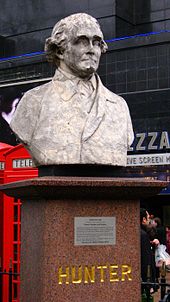
Image result for dr. john hunter leicester square
A statue of Dr. John Hunter is in London’s famous Leicester Square

This personal lament of Dr. John Hunter proved to be prophetic. At a meeting of the board of St. George’s Hospital in London in 1793, Hunter became entangled in a heated argument with other board members. He stormed out of the meeting, and dropped dead in the next room.

“My life is at the mercy of any scoundrel who chooses to put me in a passion” Hunter had grumbled only a short while before his own death.

Dr. John Hunter’s untimely demise at the age of 65 is a cautionary tale to anyone today who allows their own emotions to be determined by the whims and inclinations of others.

Image result for Proverbs 16:32

There’s an ancient proverb found in the Bible that says: “It is better to be patient than powerful. It is better to have self-control of your own emotions than to be in control of an entire city.” (Proverbs 16:32).

The result of living in the spirit of Christ is love and joy, peace and patience, gentleness and self-control. For our Creator has given us a spirit of love and self-control of our own emotions (Galatians 5: 22-23, 2 Timothy 1:7).
********

David speaking 2

About this blog: Pastor David Riley is a Christian minister residing on the Gold Coast in Australia. This article is from his “Reverential Ramblings” series – which you can subscribe to by clicking “follow” on this website.


Broken Batons

BROKEN BATONS

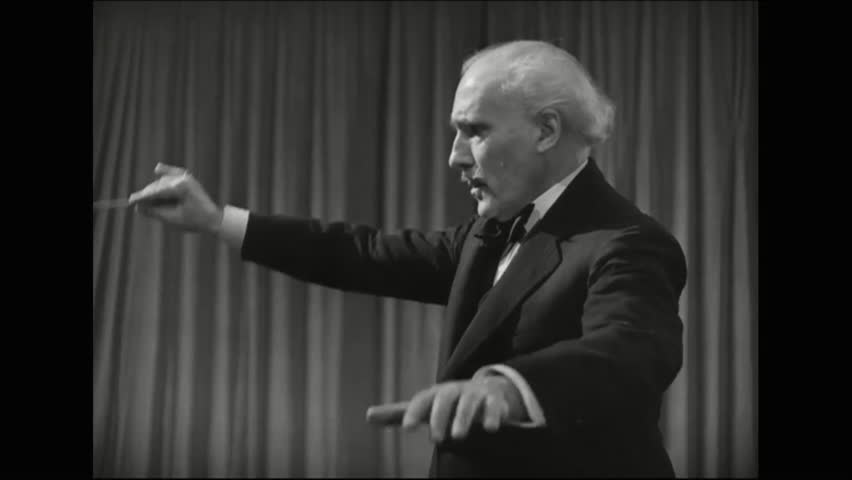
Image result for Arturo Toscanini

Arturo Toscanini was the Beyonce of the operatic world for the first half of the twentieth century. For over fifty years Toscanini was the world’s leading conductor of orchestras, and was the headline performer at Milan’s famous “La Scala” and New York’s Metropolitan Opera.

Apart from his musical genius, Toscanini was legendary for his fits of rage. If rehearsals weren’t going perfectly, the Italian maestro would scream and swear and throw whatever item was closest to him.

The librarian who looked after all the sheet music in one of Toscanini’s orchestras became quite distressed by Toscanini’s habit of hurling expensive musical scores at the musicians when he became angry. After a few episodes of expletive-laden rage, the librarian observed that one of the first things Toscanini did when he lost his temper was to take his conductor baton in both hands and attempt to break it. If the baton snapped, Toscanini would calm down and the rehearsal could continue. If the baton didn’t break, Toscanini would become even more enraged and rush around grabbing the expensive sheet music tearing it to pieces and hurling it at his musical colleagues.

Related image

So the orchestra librarian developed a cunning plan to minimise both the emotional damage to the orchestra and also the expensive waste of musical scores. The sneaky librarian made sure all of Toscanini’s batons had a slight crack in them so Toscanini could break them easily whenever he started one of his childish rants. Once Toscanini broke the baton he’d calm down and the music (and musicians!) would be saved from further abuse.

Our world today is filled with anger. We see it online in our dialogue, we see it on our roads in our driving, it’s in our political diatribes, and unfortunately anger is also occasionally invited to our our own dinner tables. Yet unchecked anger is an emotion that has no place in the words and actions of a follower of Christ.

There’s an ancient Jewish saying found in the Bible: “A fool vents all his feelings, but the wise  bring calm to all circumstances” (Proverbs 29:11). And someone close to Jesus of Nazareth wrote to first century Christians saying, “All of us must be quick to listen, slow to speak, and even slower to get angry. Anger does not produce the righteousness God desires.” (James 1:19-20).

Image result for A fool vents all his feelings, but the wise  bring calm to all circumstances

Anger may break batons and even bones, and it often damages our bond with our loving Creator.

The Apostle Paul wrote something to the Philippians I remind myself of whenever I feel the red mist of anger descending:

“Let your gentleness be known to all men because the Lord is at hand.

Be anxious about nothing, but through prayer and with thanksgiving let your requests be made known to God – and the peace of God which surpasses all understanding, will guard your hearts and minds through Christ Jesus.” (Philippians 4:5-7)

As Alexander Pope once said, “To be angry is to revenge the faults of others on ourselves.”

*******

David speaking 2

About this blog: Pastor David Riley is a Christian minister residing on the Gold Coast in Australia. This article is from his “Reverential Ramblings” series – which you can subscribe to by clicking “follow” on this website.

A Royal Story

Queen_Victoria_by_Bassano.jpg

When Queen Victoria was a young girl she understandably didn’t quite understand the full responsibilities of being the next in line for the throne of Great Britain.


The story is told of the young Victoria’s private tutors becoming frustrated as they tried to prepare her for the role of being Queen one day. These teachers were unable to motivate the young princess to concentrate on her lessons and take her studies seriously.


Finally, one of her teachers became so exasperated with the young girl, he sternly reprimanded her: “This is not the way the future Queen should behave!”


Upon hearing this, it’s reported that the young Victoria went quiet for a few moments and then said quietly “Yes. You are correct. From now on I will be good.”


And she was.


Young Victoria.jpg
A young Victoria – painted by Franz Xaver Winterhalter of Germany


The realisation by a young girl that she had inherited this high calling immediately gave Victoria a sense of responsibility. This sense of duty profoundly affected her conduct for the rest of her life.


This royal story from two hundred years ago reminds me of the Apostle Paul writing: “Don’t you know that you are the temple of God and that the Spirit of God dwells in you? It is because Christ died for you that you are holy.” (1 Corinthians 3:16-17)


And the Apostle John had a similar realisation when he wrote: “See what great love the Father has lavished on us, that we should be called children of God! And that is what we are!” (1 John 3:1)


When we realise we are a son or daughter of the King of the universe that should compel us to take our earthly duties more seriously.


Perhaps we should respond to our calling from Christ with the same words as a young Queen Victoria: “Yes. From now on I will be good.”


******

About this blog: Pastor David Riley is a minister of the Seventh-day Adventist Church and lives on the Gold Coast in Australia. This article is from his “Reverential Ramblings” series – which you can subscribe to by clicking “follow” on this website.

Want to read more inspirational stories of faith from this series? Click here to read the amazing reason one Olympic rower stopped in the middle of an important race.David speaking 2


One Man, One Word

One word written by one man over 500,000 times on the streets of Sydney (Australia) for thirty-five years would inspire millions.


When Arthur Stace awoke hungover in a gutter on that Wednesday morning – he wouldn’t have contemplated that thirty years after his death his writing would be read by over two billion people.


The date was August 6, 1930 and Arthur Stace had been sleeping rough in the streets of Sydney for ten years. His addiction to methylated spirits had been his decade-long closest friend robbing him of home and health. As the fog slowly cleared in his head that Wednesday he contemplated attending a nearby church. His motivation wasn’t spiritual but more rudimentary – the church offered homeless men a small meal if they would sit through a sermon from the minister.


Yet something unexpected would happen that night to Arthur. The minister spoke to the homeless men gathered at the church about a Creator who wished for an eternity with each of them – and something supernatural quickened the heart of an alcoholic. Arthur Stace later joked that he came to St. Barnabas Church for a rock cake but left with the “Rock of Ages” – Jesus Christ.

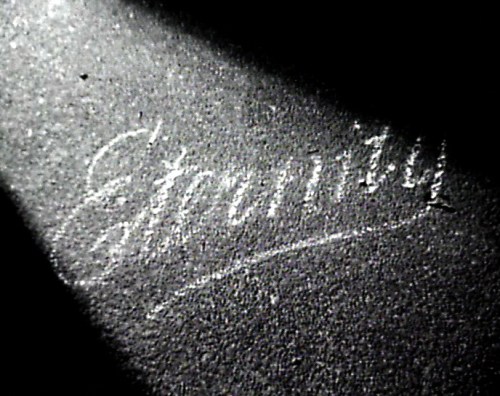
eternity on street.jpg

Through his commitment to his Saviour, Arthur’s life began a renovation. He “cleaned himself up”, earned himself a job, and began to help out in ministries at the church aiding other homeless men. Arthur Stace became an example of the direction given in Galatians 6:2 – “Carry each other’s burdens, and in this way you will fulfil the law of Christ.”


Like many men in the 1930’s of Australia, Arthur Stace only had a primary school education – so reading and writing was a difficulty for him. So it would seem incredulous at the time that decades later millions of people would be inspired by his one-word-sermon.


Two years into his Christian faith in 1932 Arthur was attending a Monday night church service. The preacher (himself a veteran of the Great War – just like Arthur) quoted Isaiah 57:15 and exclaimed “Eternity! I wish that I could sound or shout that word to everyone in the streets of Sydney…..where will you spend “Eternity”?”


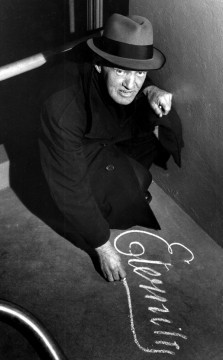
Arthur Stace felt compelled. He walked out of the building onto the street outside the church and felt in his pocket where he found a piece of chalk. Arthur would later say: “(The word) “Eternity” (was) ringing through my brain and suddenly I began crying and felt a powerful call from the Lord to write.”


On the pavement he knelt down and wrote out that word – “Eternity” – in white chalk with a beautiful swirl.

stace-arthur - bending down to write in street.jpg


The next morning Arthur woke at 4am and prayed. He again felt compelled to go out in the streets while it was still dark and write again the word “Eternity”. And he did so – only this time the wrote it every 100 metres or so for the next few hours – about 50 times in total. As people made their way to work later that morning they saw the word “Eternity” in bold, beautiful script throughout their suburb – and they wondered what it meant.


Arthur would later say: “I had no schooling and couldn’t have spelt ‘eternity’ for a hundred quid. But suddenly I began crying and felt a powerful call from the Lord to write the word. It came out smoothly, in a beautiful copperplate script.”

Arthur Stace cartoon.jpg

Arthur Stace would continue writing this word “Eternity” each day before dawn for the next 35 years – until his death in 1967.


During this time this one word sermon became famous on the streets of Sydney. It caused an entire city to contemplate life’s shortness and also the possibility of what happens after we die. They also wondered who was writing the word, with children exhilarated to see “Eternity” written in their suburb in the famous copperplate script, and newspapers offering front-page possibilities as to who the author was and also the word’s meaning.

Stace_eternity - caught in the act.jpg


On the few occasions the police would catch Arthur pre-dawn with chalk in hand, Arthur would tell them he “had permission from a higher source” to graffiti the streets – and because the word was only in chalk the police would let him go.


One word – washed away in the next rain.
One word – written with passion and dedication for decades.
One word – that captured the city’s heart.


Arthur Stace died in 1967 knowing he’d faithfully followed his Saviour. And yet, thirty-three years after Arthur’s death there would be a resurrection.


At the stroke of midnight on New Year’s Eve in 1999 with Sydney’s world-famous fire works in full swing – and an estimated billion people watching on television with Sydney as the first major world-city to welcome in the new millennium  – the culmination of the celebration was the lighting up of the Sydney Harbour Bridge. And there was Arthur’s famous swirl of a word “Eternity” emblazoned across the famous coathanger as the crescendo.

Eternity - Sydney Harbour Bridge.jpg

The word once again inspired so many people that Arthur’s “Eternity” was used again a few months later at the Opening Ceremony of the 2000 Sydney Olympics.


One word – “Eternity” – where will you spend yours?


As the biblical prophet Isaiah wrote 2,700 years ago: ‘For this is what the high and exalted One says— He who lives for eternity: “While I live in a high and holy place – I also live with anyone who has a contrite and lowly spirit. For I revive the spirit of the lowly and also the hearts of those contrite.” ‘ (Isaiah 57:15)

arthur-stace-writes-eternity - posed.jpg
Arthur Stace – “Mr. Eternity”     (1885 – 1967)


About this blog: Pastor David Riley is a Christian minister residing on the Gold Coast in Australia. This article is from his “Reverential Ramblings” series  – which you can subscribe to by clicking “follow” on this website.

David speaking 2


Death by Dictator

Idi Amin.jpg
General Idi Amin was the dictator of Uganda from 1971 to 1979


DEATH BY DICTATOR

The African country of Uganda was a violent place during the 1970’s under the dictator army general Idi Amin.

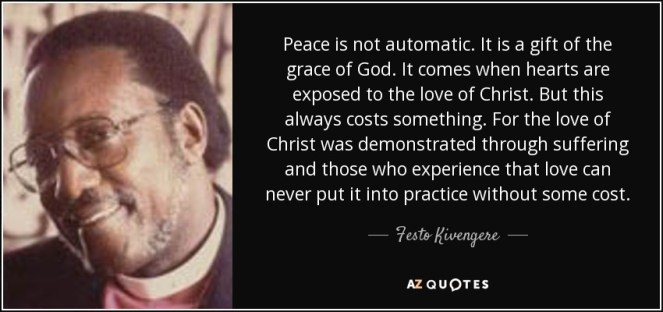
Colin Chapman, in his book “The Case for Christianity” quotes Ugandan bishop Festo Kivengere’s account of the 1973 execution by firing squad of three men from his diocese: “February 10th began as a sad day for us in Kabale. People were commanded to come to the stadium and witness the execution. Death permeated the atmosphere. A silent crowd of about three thousand was there to watch. I had permission from the authorities to speak to the men before they died, and two of my fellow ministers were with me. They brought the men in a truck and unloaded them. They were handcuffed and their feet were chained. The firing squad stood at attention.

As we walked into the center of the stadium, I was wondering what to say. How do you give the gospel to doomed men who are probably seething with rage? We approached them from behind, and as they turned to look at us, what a sight! Their faces were all alight with an unmistakable glow and radiance.


Festo 2.jpg
Bishop Festo Kivengere fled Uganda in 1973 under death threats from General Idi Amin. He returned a few years later to help his country rebuild after the destruction caused during the 1970’s. Bishop Kivengere later wrote a book titled “I Love Idi Amin” to draw attention to the qualities of forgiveness for those who wronged you and love of those who persecute you.


Before we could say anything, one of them burst out: “Bishop, thank you for coming! I wanted to tell you. The day I was arrested, in my prison cell, I asked the Lord Jesus to come into my heart. He came in and forgave me all my sins! Heaven is now open, and there is nothing between me and my God! Please tell my wife and children to accept Him into their lives as I did.”

The other two men told similar stories, excitedly raising their hands, which rattled their handcuffs. I felt that what I needed to do was to talk to the soldiers, not to the condemned. So I translated what the men had said into a language the soldiers understood. The military men were standing there with guns cocked and bewilderment on their faces. They were so dumbfounded that they forgot to put the hoods over the men’s faces!

The three faced the firing squad standing close together. They looked toward the people and began to wave, handcuffs and all. The people waved back. Then shots were fired, and the three were (dead). We stood in front of them, our own hearts throbbing with joy, mingled with tears. It was a day never to be forgotten. Though dead, the men spoke loudly to all of Kigezi District and beyond, so that there was an upsurge of life in Christ, which challenges death and defeats it. The next (weekend), I was preaching to a huge crowd in the home town of one of the executed men. Again, the feel of death was over the congregation. But when I gave them the testimony of their man, and how he died, there erupted a great song of praise to Jesus! Many turned to the Lord there.”

Bishop Kivengere’s experience in witnessing the death of three men – who had unexpectedly committed their lives to Christ – not only changed his life but also the lives of many others.

But those three executed prisoners were simply mirroring the death of the Messiah. Jesus’ submission to death by execution on a cross by Roman dictators two millennia ago has impacted the lives of billions since.

Jesus “died for us, so that whether we are awake or asleep, we will live together with Him.” (1 Thessalonians 5:10) 

JesusFinalHours-56a149da5f9b58b7d0bdda13.jpg


About this blog: David Riley is a Christian minister residing on the Gold Coast in Australia. This article is from his “Reverential Ramblings” series.

“Don’t Move!” – The story of the Duke of Wellington

Wellington.jpg
The Duke of Wellington (1769 – 1852): British soldier and statesmen


Arthur Wellesley – the 1st “Duke of Wellington” – is one of the most famous men of the nineteenth century. The Duke was a decorated soldier and statesman – even becoming the British Prime Minister.
 
But what the Duke of Wellington is most famous for is being the commanding army officer of the British forces when they defeated Napoleon Bonaparte and the French army at the Battle of Waterloo in the year of 1815.
battle.jpg
The Battle of Waterloo (in modern-day Belgium) was fought on Sunday, 18th of June, 1815
 
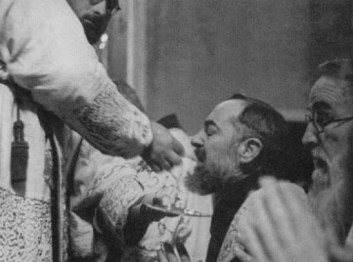
As a man of faith, the Duke of Wellington would regularly take Communion at his local church where the tradition was that parishioners would come down to the front and be served by the minister while the kneeled at the church’s alter.
 
And when the Duke of Wellington was at the table nobody else dared come forward until he had finished. 
 
One day, at the height of the Duke’s fame and power, he was taking Communion when a poorly-dressed elderly man walked up one of the church’s aisles, and when reaching the Communion table, knelt down close by the side of the Duke of Wellington.
 
Immediately there was tension in the church, and a small commotion from the other parishioners present interrupted the reverent silence.
receiving-communion2.jpg 
Someone came down and touched the poor man on the shoulder, and whispered to him to move further away from the Duke, or even better – to rise and walk away, and wait until the Duke had finished receiving the bread and the wine.
 
But the great army commander had seen the meaning of that touch on the shoulder and perhaps partly heard the whisper in the old man’s ear.
 
The Duke of Wellington quickly clasped the old man’s hand and held him to prevent the old man from standing up. In a respectful but firm whisper, the Duke of Wellington said to the elderly gentleman: “Don’t move…. We are all equal here.”
 
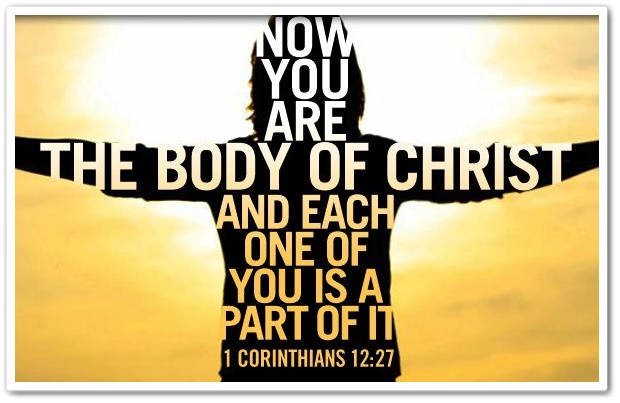
This story from two centuries ago illustrates one of the key messages of the Gospel – that “we are all one in Christ” (Galatians 3:28).
 
In a world of significant and increasing disparities – we regularly need reminding that in the eyes of our creator we are all loved and valued the same. There is no differences between black and white, rich and poor, male or female.
 
God loves each one of us equally – and the ultimate demonstration of that love is Christ’s submission to the cross for the salvation ofeveryone.
 
At the foot of the Cross of Jesus Christ – we are all equal there.
1 Corinthians 12-27.jpg
About this blog: David Riley is a Christian minister residing on the Gold Coast in Australia. This article is from his “Reverential Ramblings” series.

The Difference Between Acting and Living…

Charles_Laughton-publicity2.jpg
Charles Laughton (1899 – 1962)
Charles Laughton was a famous English actor. Classically trained, Laughton performed in many of Shakespeare’s plays in London and went on to star in a number of major Hollywood films during the 1930’s and 40’s.
There’s a story from Charles Laughton’s life that illustrates the difference between acting and living.
Laughton was attending a Christmas party with family friends in London one year. During the evening the host of the party asked everyone to recite a favourite poem or passage from literature that best represented the spirit of Christmas. When it was the turn of the famous actor Laughton skilfully recited Psalm 23 from the Bible. Of course, everyone applauded Laughton’s excellent performance when he finished – and then it moved onto the next person’s turn.
The last to participate was an adored elderly aunt who had dozed off in a corner. Someone gently woke her and explained what was going on. She thought for a moment and in a shaky voice the aged lady began to recite Psalm 23: “The Lord is my shepherd I shall not want…”
Psalm 23.jpg
There was a slight disquiet in the room for a brief moment as everyone realised the aunt wasn’t aware Laughton had already shared the exact same passage a few minutes earlier. But within a couple of lines of her rendition of Psalm 23 something happened – the emotion with which this old lady spoke these famous words of Scripture took the gathering by surprise. When she finished there were audible sobs from some of those gathered, so unexpectedly moved were they by the re-telling of these ancient words.
When the party was over and Charles Laughton was leaving the host thanked him for coming, and then awkwardly commented on the difference in responses from Laughton’s reciting of Psalm 23 to that of the host’s elderly aunt.
Charles Laughton’s response is said to have been: “Yes, well, I guess I simply know the Psalm – but she clearly knows the Shepherd.”
 
cropped-shepherd.jpg
Being a follower of Jesus is not acting a part but living a real relationship with your Creator. 
 
“Therefore, if anyone is in Christ, he is a new creation. The old has passed away, and behold – the new has come!” (2 Corinthians 5:17).

*******

About this blog: Pastor David Riley is a minister of the Seventh-day Adventist Church and lives on the Gold Coast in Australia. This article is from his “Reverential Ramblings” series – which you can subscribe to by clicking “follow” on this website.

Want to read more inspirational stories of faith from this series? Click here to read the inspiring story of how one soldier’s sacrifice changed an entire prisoner-of-war camp during World War II.David speaking 2