Part of a series of "rambling reflections" by Pastor David Riley – a church minister located on the Australian Gold Coast. Make sure you click the "follow" button to receive an update on these articles as soon as they're posted.
Author: reverentialramblings
Pastor David Riley is a minister of the Seventh-day Adventist Church and lives on the Gold Coast in Australia. This article is from his “Reverential Ramblings” series – which you can subscribe to by clicking “follow” on this website.
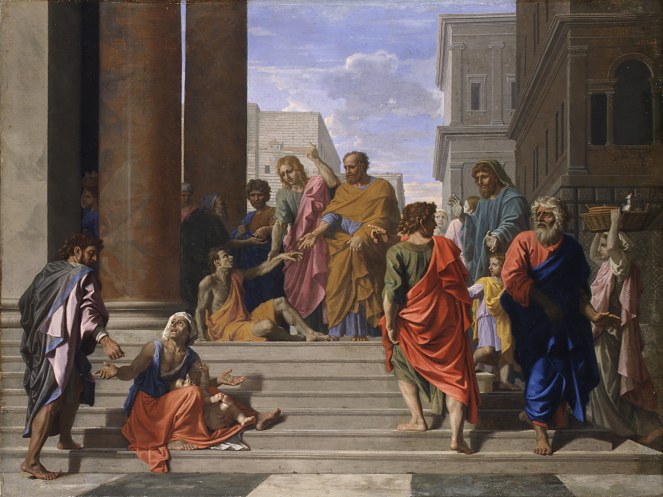
There’s a story in the New Testament of the Apostles Peter and John going to the temple in Jerusalem one afternoon to pray. Along the way they met someone who had been unable to walk since birth and had to resort to begging in order to live. When this man asked Peter & John for money, Peter’s well-known response was “Silver and gold I do not have, but what I do have I give you – In the name of Jesus Christ of Nazareth, rise up and walk.” Peter’s faith in Christ enabled him to perform a miracle and that day the man went home not just walking but leaping for joy.
Twelve hundred years later Thomas Aquinas was visiting the Vatican and surprised Pope Innocent when Thomas walked into one of the treasury rooms. The Pope was unexpectedly present helping to count a very large sum of money. Pope Innocent sheepishly looked at Thomas and said: “Well Brother Aquinas, I guess the church is in an age where we can no longer say ‘Silver and gold I do not have.’”
“That is true, Holy Father,” Thomas respectfully replied. “And for that reason,” Thomas continued, “the church can no longer say to the lame ‘In the name of Jesus Christ rise up and walk.’”
Thomas Aquinas understood the correlation between material comfort and faith. Often when one is in abundance the other is lacking. Are the riches and comforts in our age the reason we see less of the miraculous works of Christ?
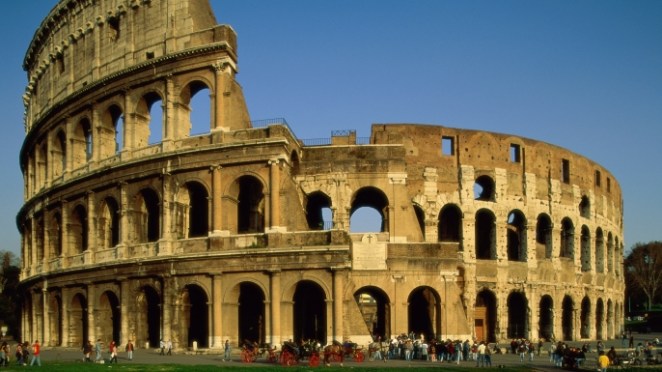
The ruins of the famous Colosseum in Rome today. Up to 80,000 spectators once crammed into watch battles between gladiators and beasts, and also the execution of Christians.
ONE MAN’S VOICE:
Sixteen hundred years ago a simple holy man from the countryside found himself in Rome for the first time. His name was Telemachus – and this Christian monk had arrived in the “eternal city” of Rome during its celebrations of a recent victory over the Barbarians.
As part of the festivities the famous Roman Colosseum was hosting a series of gladiatorial events – and so this rural monk simply followed the crowd into the huge stadium. Telemachus didn’t know what he was about to witness, nor did he know that within an hour his actions would bring about the end of gladiators fighting in the Colosseum.
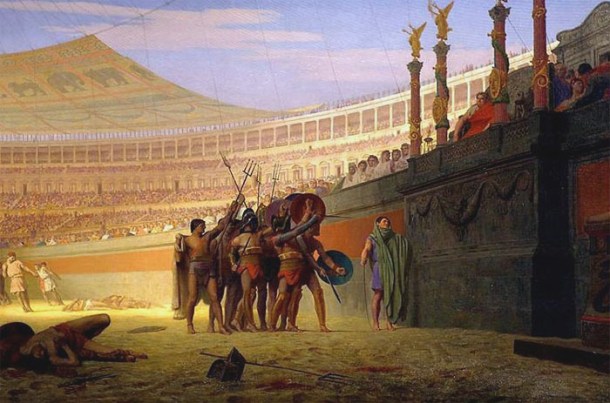
As Telemachus stood at the back of the stands wondering why the crowds were gathering, the gladiators came out and stood before Emperor Honorius. These trained fighters gave the pledge their profession had been giving for centuries: “Ave, Imperator, morituri te salutant” (“Hail, Emperor, we who are about to die salute you”).
“Hail, Emperor, we who are about to die salute you” – was a famous greeting gladiators would give the watching Roman leader before each battle
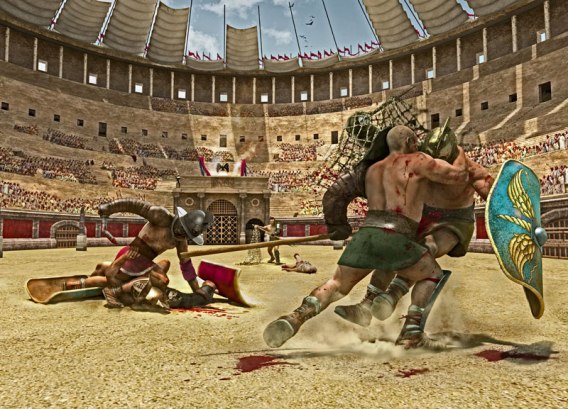
Telemachus might have lived a simple country life as a monk but he wasn’t dumb. He quickly realised these men were about to battle to the death. Unable to understand why crowds would watch men kill each other he cried out “In the name of Christ, stop!” but his voice was lost in the cheering crowd.
As the gladiators began to fight each other Telemachus ran down to the front of the stands and yelled out again “In the name of Christ, stop!” but still he was unsuccessful in being heard.
So Telemachus did the unthinkable. He climbed over the wall into the arena and walked towards the battling gladiators, pleading “In the name of Christ, stop!”
The crowd cheered as they saw this scrawny and dishevelled holy man. They initially thought he was part of the entertainment – but the crowds quickly grew angry as they realised he was trying to interrupt the entertainment.
As Telemachus approached the gladiators he continued his appeal: “In the name of Christ, stop!” But instead of heeding Telemachus’s appeal one of the fighters lifted his sword and plunged it into the monk’s body. Telemachus dropped to the sand and his last words were to the gladiator who had delivered the fatal blow: “In the name of Christ, stop!”
Telemachus climbed into the arena and pleaded with the battling gladiators ““In the name of Christ, stop!”
As the other gladiators stopped their fighting and stood over the body of this simple man the spectators fell silent. And then one-by-one the crowd began to leave the Colosseum. The stadium soon emptied and that day’s events were subsequently cancelled. When only a handful of people turned up for the following day’s battles that day was cancelled too. The Roman Emperor, who had witnessed the death of Telemachus, soon passed a law putting an end to gladiatorial battles. The Colosseum of Rome would never again host this barbaric entertainment.
One tiny voice filled with the spirit of christian compassion was willing to take a risk. And Telemachus’s actions changed history.
You may think your voice won’t be heard over a crowd unwilling to listen, but what impact might you be able to make in your world? Act and speak with the humility of the Saviour – and your voice will be heard.
*******
About this blog: Pastor David Riley is a minister of the Seventh-day Adventist Church and he lives on the Gold Coast in Australia. This article is from his “Reverential Ramblings” series – which you can subscribe to by clicking “follow” on this website.
Click here to join the Facebook page for “Reverential Ramblings”
Want to read more inspirational stories of faith from this “Reverential Ramblings” series? Click here to read the strange story of how one orchestra member saved his colleagues from the wild temper tantrums of their world-famous conductor
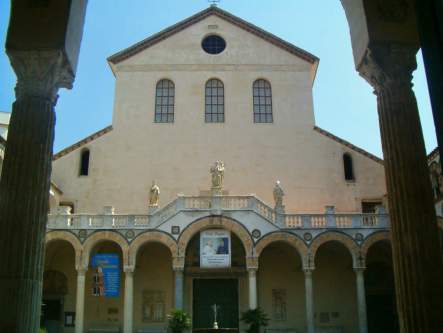
On the stunning Amalfi coast near Naples in Italy there are towns that cling to cliffs and wind their way down to the warm waters of the Mediterranean. At the end of the Almalfi road you’ll find the town of Salerno with an impressive cathedral dedicated to St. Matthew.
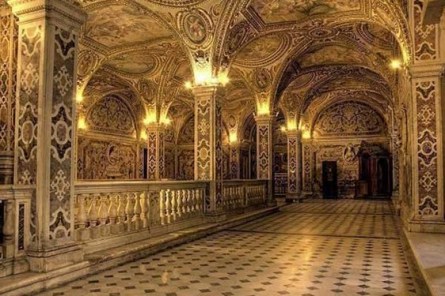
In this cathedral under the chapel lies a tomb built over a thousand years ago and is said to house the bones of Matthew – one of the original twelve Disciples of Jesus. Saint Matthew gave up a high income profession to follow Jesus and be taught by the Master for three and a half years. Matthew would later go on to write one of the four biographies we have of Christ’s life.
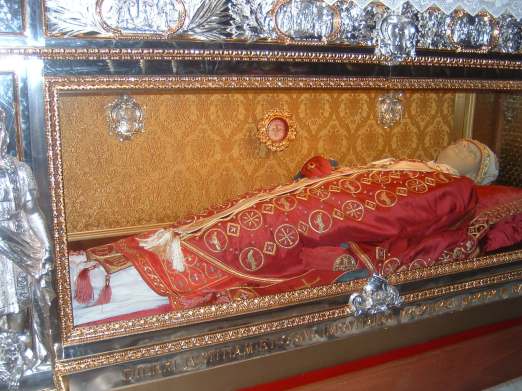
What’s particularly interesting is that to the right of the main alter in the cathedral is the tomb of Pope Gregory VII who died here in 1085AD.
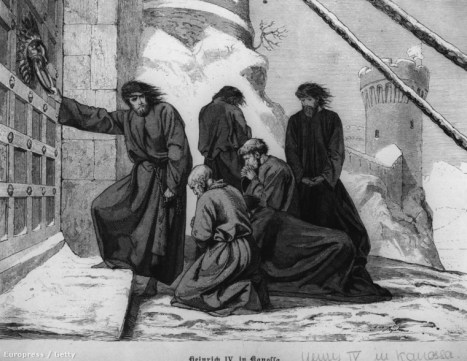
Pope Gregory VII was famous for a number of things – including being especially arrogant and also very political. It was Gregory who first declared that the Roman Catholic Church was infallible – and had therefore never made a mistake in its decisions or understanding of the Bible. And it was Gregory who engaged in a political power struggle with King Henry IV – the young emperor of Germany. When it became clear to Henry that Pope Gregory had the upper hand Henry decided to go to the Pope to ask for forgiveness.
So the king made the long journey from Germany to Italy and arrived in the winter. When the king knocked on the door Pope Gregory made Henry stand outside in the snow, bare-footed and without any head covering for three days. And for those three days King Henry had to constantly repeat out loud “I’m sorry. Please forgive me!”
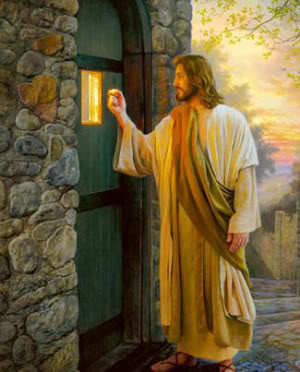
Picture that scene – the head of the church making a king grovel for forgiveness. Compare that scene with Christ who doesn’t make anyone beg for forgiveness but offers it freely and immediately to anyone with a genuinely repentant heart. In fact Jesus says in scripture that it is He who knocks on the door of our hearts and then waits for us to invite Him in (Revelation 3:20). Don’t leave our humble Saviour in the cold. Open the door, tell Him “I’m sorry. Please forgive me!” – and invite Him in to your life.
For the next six weeks I’ll be travelling through some of Europe on a study tour of some of the main sites of the “Reformation”. It’s the 500th anniversary of Martin Luther knocking his “You’ve Gotta Be Kidding Me (times 95)!” checklist into the church door in Wittenberg. Those who are a little familiar with church history in Europe will know there’s more to the kick-off and subsequent brouhaha (now there’s a word that should be used more) than Luther’s hammer and his ninety-five theses. So, this blog will be aiming to bring together some “Reverential Ramblings” as I share mostly tidbits but also the ocassional titanic thought!





 Reverential Ramblings